
Introduction
Potato Export Challenges from Depalpur Pakistan | Gulf, Turkey, China & Sri Lanka Meta Description: Explore the major challenges faced by potato exporters from Depalpur, Okara, Pakistan when targeting Gulf countries, Turkey, China, and Sri Lanka — and what solutions can unlock global markets for Pakistan’s farmers. Focus Keyword: potato export from Depalpur Secondary Keywords: Pakistan potato export challenges, Depalpur potato farmers, potato export Gulf countries, Pakistan agriculture export barriers, Depalpur Okara agriculture
Introduction: Depalpur — Pakistan’s Potato Powerhouse Struggling to Reach the World
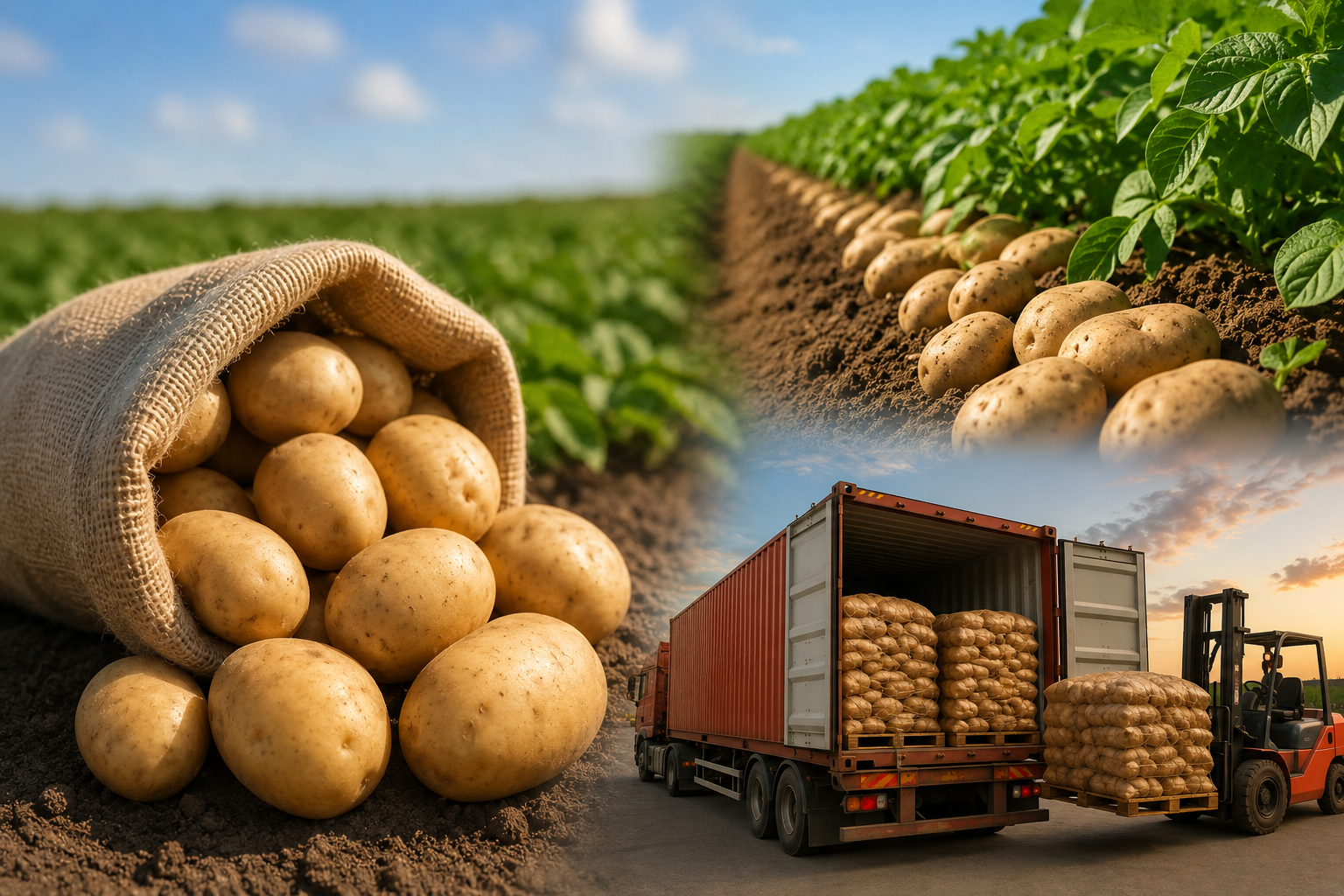
Tucked within the sun-baked, fertile plains of District Okara in Punjab, the town of Depalpur is no ordinary farming community. It is the beating heart of Pakistan’s potato industry — a place where cold storage facilities line the roadsides, tractor-pulled carts move mountains of freshly harvested crop, and the rhythm of life is dictated entirely by the planting and harvest calendar. The farmers here do not just grow potatoes — they pour their entire livelihoods, savings, and futures into every acre they sow.
Pakistan is proudly the ninth-largest potato producer in the world, and Depalpur sits at the centre of that achievement. Punjab province contributes approximately 95% of Pakistan’s total national potato output, and within Punjab, the Okara-Depalpur belt is among the most productive zones. In the 2024–25 growing season, Pakistan produced over 9.4 million tonnes of potatoes, exceeding its national production target by an extraordinary 44.7%. On paper, these are the statistics of an agricultural giant.
But on the ground, the reality is heartbreaking.
Farmers in Depalpur are selling their potatoes at Rs 20 to Rs 25 per kg in the open market, while the cost of producing those same potatoes runs to Rs 55–60 per kg. That gap translates to crushing losses of Rs 235,000 to Rs 250,000 per acre — season after season, year after year. Cold storage facilities across Punjab sit packed beyond capacity. Traders who once bought and speculated on export demand have retreated from the market. In the devastating 2025 season, potatoes were reportedly being distributed as livestock feed because domestic prices had fallen so far that selling them was pointless.
The brutal truth is this: Pakistan does not have a potato production problem. It has a potato export problem.
Getting Depalpur’s potatoes from the fields of Okara to the dining tables of Dubai, the processing factories of Istanbul, the supermarkets of Shanghai, and the wholesale markets of Colombo remains an enormous challenge — blocked at every turn by disease, logistics failures, certification gaps, geopolitical instability, market ignorance, and decades of under-investment in agricultural export infrastructure. This blog examines, in honest detail, the specific challenges that Pakistani potato exporters face when targeting Gulf countries, Turkey, China, and Sri Lanka — four of the most important and potentially lucrative markets in the world — and what structural changes are needed to unlock them.
Pakistan’s Potato Sector: A Surplus Without a Strategy
Pakistan’s potato production has surged dramatically over the past decade, driven by improving yields, expanding cultivated areas, and rising farmer interest in the crop as a cash earner. In 2024–25, the area under potato cultivation reached 953,000 acres — a 14% expansion in a single year. In Punjab alone, the area grew by a further 24% in 2025–26. Total production crossed 9.4 million tonnes, with a surplus of 4 to 4.5 million metric tonnes above domestic consumption needs.
This expansion was driven by what economists call a “bandwagon effect.” In recent years, potato cultivation demonstrated noticeably higher profit margins compared to traditional grain crops like wheat. Inspired by these returns, farmers across Punjab and Khyber Pakhtunkhwa began a large and largely uncoordinated expansion of potato acreage, without adequate planning for how the resulting surplus would be absorbed by either domestic consumption or export markets. When everyone plants potatoes expecting high prices, everyone suffers when the market floods.
Pakistan exports potatoes to more than 43 countries, generating $138 million in export value in 2024 alone. The crop is Pakistan’s largest vegetable by area and production, and it generates a significant exportable surplus each year. Yet the country has never built the robust, diversified export infrastructure needed to convert that surplus reliably into foreign exchange earnings and farmer income. Key structural weaknesses — inadequate cold chain infrastructure leading to 25–30% post-harvest losses, weak phytosanitary certification systems, poor packaging standards, and an over-dependence on a single geopolitical trade corridor — have left Pakistan’s potato export sector permanently vulnerable.
The consequences fall hardest on the farmers of Depalpur, who grow more than enough potatoes to supply international markets but lack the system around them to make that happen profitably.
The Afghanistan Crisis: When One Border Closed and Everything Fell Apart
To understand why Pakistan’s potato export system is so fragile, it is essential to understand the Afghanistan dependency — and the catastrophe that followed when it ended.
For years, Afghanistan served as the cornerstone of Pakistan’s potato export strategy. In 2023, Pakistan exported 755,811 tonnes of potatoes worth $140 million globally, of which 311,798 tonnes — a full 41% — went to Afghanistan. In 2024, the figures were almost identical: 736,062 tonnes valued at $138 million, with Afghanistan again absorbing approximately 42% of the total volume. Afghanistan was not merely a buyer. It was the essential transit gateway through which Pakistani potatoes reached Central Asian markets — Tajikistan, Kazakhstan, Kyrgyzstan, Turkmenistan, and Russia. Without Afghanistan’s transit routes, access to those markets was effectively impossible.
In October 2025, Pakistan restricted border trade with Afghanistan amid deteriorating bilateral relations. Almost overnight, 41–42% of Pakistan’s potato export capacity simply vanished. The domestic market was immediately flooded with surplus that had no other outlet. Prices crashed. Traders who had invested in storing potatoes in anticipation of export demand suffered catastrophic losses. Ahmed Hasan, a prominent potato grower and cold storage operator from Depalpur itself, captured the situation vividly: “Last year’s experience underscores the risk that arises when Afghan markets are open: investors bought potatoes from farmers and stored them in anticipation of export demand. Farmers received reasonable prices, but traders suffered heavy losses when prices failed to recover. This year, those investors will likely stay away.”
The government’s emergency measure of permitting exports through an alternative route via Iran — announced in December 2025 — offered only marginal relief. The damage was already done.
This crisis did not come as a surprise to agricultural economists. It was the inevitable consequence of building an entire export strategy on a single unstable geopolitical corridor. With the Afghan route gone, Pakistan urgently needed Gulf countries, Turkey, China, and Sri Lanka to absorb its surplus. But entering or scaling up in each of these markets came with its own formidable set of challenges — challenges that years of neglect had left entirely unresolved.
The Six Universal Barriers Facing Every Potato Exporter from Depalpur
Before examining each target market individually, it is important to understand the core structural problems that undermine every export attempt from Depalpur, regardless of destination.
Broken Cold Chain Infrastructure is perhaps the single most damaging problem. Pakistan loses an estimated 25–30% of its potato crop post-harvest due to inadequate refrigerated transport, poor farm-level pre-cooling, and cold storage facilities that do not meet international export standards. Potatoes that leave Depalpur’s farms in good condition can arrive at Karachi Port already degraded — and by the time they reach a foreign buyer’s warehouse, the quality damage may be severe enough to justify rejection or steep price deductions.
Disease and Quality Inconsistency is the second major barrier. Green potato and black heart disease have been identified as significant quality problems affecting Pakistani potato exports, prompting the Pakistan Horticulture Development and Export Company (PHDEC) to convene emergency meetings with industry stakeholders. Beyond disease, inconsistent sizing, irregular grading, and variable starch content make Pakistani potatoes unpredictable from a buyer’s perspective — a serious problem when international buyers demand consistency across consignments.
Weak Phytosanitary Certification is the third obstacle. Most importing countries — particularly those with sophisticated food safety regulatory systems like the Gulf states and China — require comprehensive phytosanitary documentation: maximum residue limit (MRL) compliance reports for pesticides, soil health certification, pest and disease freedom declarations, and full supply chain traceability. Pakistan’s agricultural regulatory infrastructure is not yet capable of providing this documentation reliably for every export consignment.
High and Complex Logistics Costs eat into margins at every stage. Transporting a container from Depalpur to Port Qasim costs approximately Rs 205,000, before adding port handling fees, fumigation charges, and documentation costs including a Bill of Lading fee of around $70 USD. For distant markets like China or Turkey, total logistics costs can consume all remaining profit margin for lower-value bulk consignments.
Currency Volatility creates additional uncertainty. Fluctuations in the Pakistani Rupee against the US Dollar, UAE Dirham, or Chinese Yuan make it extremely difficult to agree on firm forward contracts with foreign buyers. International buyers prefer pricing stability, and Pakistani exporters cannot offer it when their own cost base shifts unpredictably with the exchange rate.
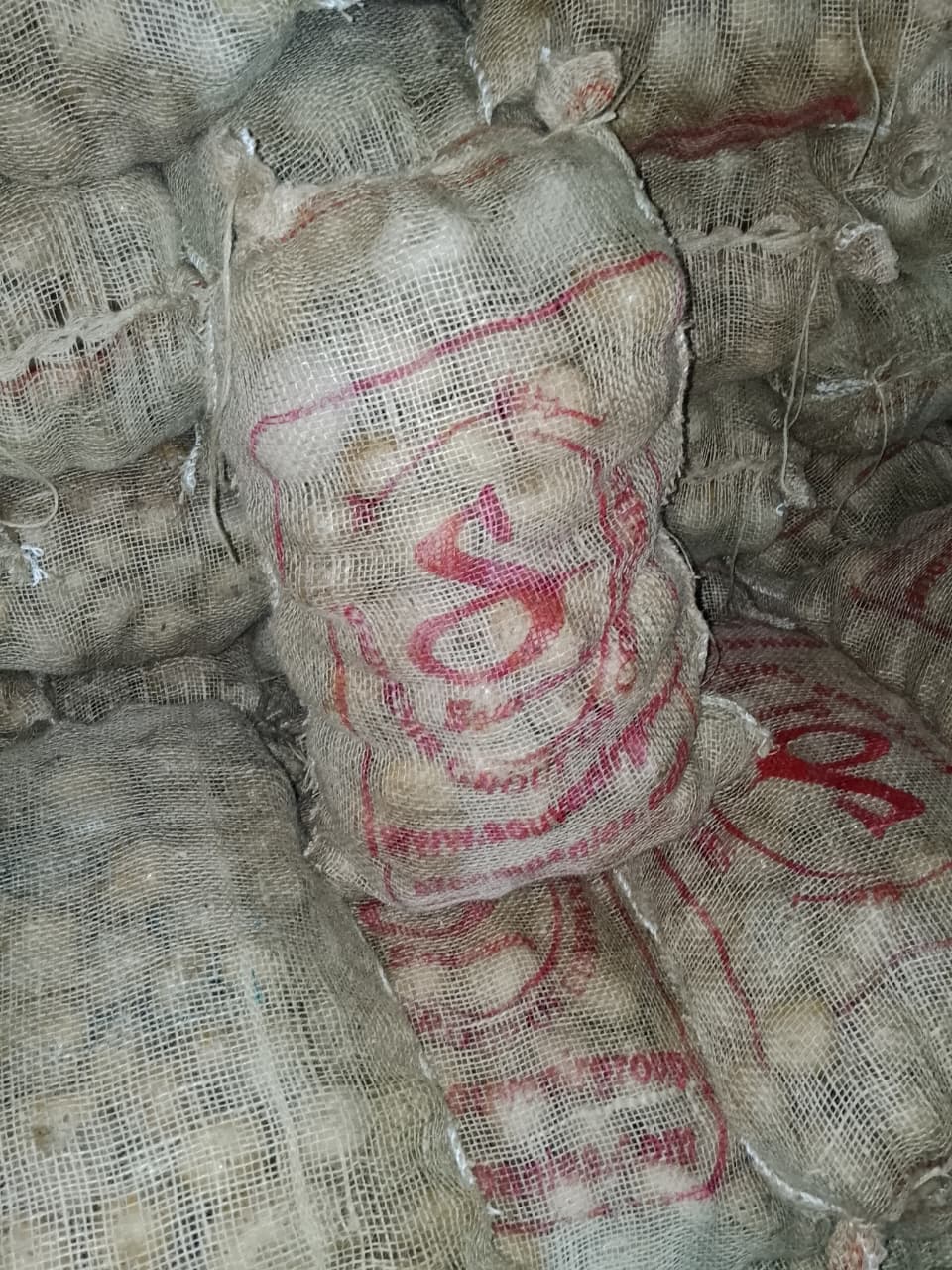
Poor Packaging and Presentation Standards round out the core problems. International supermarket chains and food processors in the Gulf, China, and Turkey expect potatoes to be washed, graded by size, and packaged in professional retail-ready bags with clear labelling. The majority of Depalpur’s exporters still rely on basic hessian sacks for bulk export — entirely inappropriate for modern international retail and food service supply chains.
Exporting Potatoes to Gulf Countries: Proximity Is Not Enough
The Gulf Cooperation Council — the UAE, Saudi Arabia, Qatar, Oman, Kuwait, and Bahrain — represents Pakistan’s most strategically natural export market. The geographic advantage is compelling: containerized shipments from Karachi or Gwadar reach Dubai in five to seven days, Doha in a similar timeframe, and Muscat even faster. This transit window is short enough to deliver fresh, good-quality potatoes if the cold chain is functioning properly. Traditional Gulf markets already absorb over 150,000 tonnes of Pakistani potatoes annually, with the UAE serving as the primary hub from which Pakistani produce is redistributed across the region.
The opportunity is enormous. The UAE acts as a regional redistribution centre, and a stronger Pakistani export presence there could reduce import costs for Gulf food service operators and retailers across the region. Qatar and Oman provide additional stable demand, and Saudi Arabia — with a population of 35 million and a rapidly expanding food service sector — represents an almost entirely untapped premium opportunity.
Yet significant barriers prevent Pakistan from capturing the market share that its geography and production capacity should logically deliver. Gulf food safety regulators enforce strict MRL standards for pesticide residues. Pakistan’s inconsistent pesticide application practices — using products and quantities that exceed Gulf thresholds — mean that a meaningful proportion of export consignments face rejection upon arrival, damaging relationships with buyers and incurring costly return or disposal fees. Egyptian, Dutch, and German potato exporters have invested heavily in GAP certification, soil testing programmes, and cold-chain partnerships with Gulf supermarket chains. They compete directly with Pakistani potatoes on quality consistency and food safety documentation — and they win premium contracts as a result.
Gulf supermarket chains — Carrefour, LuLu Hypermarket, Spinneys, and others — require washed, uniformly graded, and professionally labelled potatoes in retail-ready consumer bags. Pakistan’s export sector has invested minimally in the post-harvest processing facilities — washing lines, optical graders, automated packaging machinery — needed to meet this standard. Until that investment is made, Pakistan will remain a bulk commodity supplier competing on price alone, rather than a premium fresh produce partner competing on quality and reliability.
Exporting Potatoes to Turkey: Competing With a Competitor
Turkey presents an entirely different kind of challenge. Unlike the Gulf states, which are net importers actively seeking supply, Turkey is itself one of the world’s major potato producers and exporters — accounting for approximately 12% of global potato export shipments. This fundamental reality means that Turkey is primarily a competitor to Pakistani potatoes in third markets rather than a natural buyer of them.
Pakistani exporters attempting to enter the Turkish market face a wall of structural barriers. Turkey enforces phytosanitary regulations closely aligned with EU standards — including mandatory certification for potato cyst nematode and bacterial ring rot, two diseases for which Pakistan currently lacks adequate national testing and certification infrastructure. Without these certificates, consignments cannot legally enter Turkey regardless of price or quality.
There is no established direct container shipping service between Pakistani ports and Turkish ports on the Mediterranean or Black Sea. Every consignment must transit through intermediate ports — typically in the Middle East or Mediterranean — adding transit time, additional handling costs, and significant fresh produce quality risk. The economics quickly become unworkable for perishable fresh potatoes.
Turkey also applies substantial import duties on fresh vegetables as part of its agricultural protection policy. After these duties are applied to Pakistani potatoes, the landed cost in Turkey is no longer competitive against domestic Turkish supply or supply from neighbouring European countries with free trade agreements. Pakistani potatoes simply cannot win on price in this environment.
The most realistic near-term opportunity in Turkey lies not in fresh potato exports but in specifically certified, high-starch processing varieties supplied as industrial inputs to Turkey’s growing crisp and frozen potato product manufacturing sector. This niche is demand-driven by industrial need rather than consumer retail preference, and it requires variety certification and consistent supply contracts rather than mass market distribution.
Exporting Potatoes to China: The Giant Door That Barely Opens
China is the world’s largest potato producer, the world’s largest potato consumer, and — in theory — one of the most exciting potential markets for Pakistani potato exporters. With a population of 1.4 billion people, a rapidly growing urban middle class with changing dietary habits, and Pakistan’s CPEC-enabled connectivity, the case for a Pakistan-China potato trade corridor appears compelling. In practice, however, the barriers to exporting fresh potatoes from Depalpur to China are among the most formidable that Pakistani exporters face anywhere in the world.
China’s domestic potato production is so vast and so well-distributed that the country has minimal structural need to import fresh potatoes in large volumes from Pakistan. Breaking into this market therefore requires identifying a very specific value proposition — a particular variety, a specific seasonal availability window, or a distinctive price point — that Pakistani potatoes can deliver that Chinese domestic supply cannot.
Even before addressing market economics, there is a legal prerequisite that has not been met. China’s General Administration of Customs (GACC) requires all foreign farms and processing facilities to be individually registered and approved before any fresh produce shipments can be received. Currently, no potato exporter or farming facility in Depalpur or elsewhere in Punjab holds GACC-compliant registration for fresh potato exports to China. This means that meaningful, scalable potato exports to China are not legally possible until this foundational step is completed — a process that requires significant government-to-government diplomatic engagement and investment in farm-level compliance infrastructure.
The CPEC overland route, while transformative for many sectors, is not suitable for fresh potato exports. The Khunjerab Pass transit involves weeks of travel through extreme conditions, and fresh potatoes — even in refrigerated containers — cannot maintain acceptable quality over this duration. Sea freight from Karachi to major Chinese ports takes 18 to 22 days, which is manageable only with an end-to-end reefer container supply chain that Pakistan’s export sector has not yet developed. Chinese consumers and industrial processors further prefer specific potato varieties — varieties with defined starch, dry matter, and skin characteristics — that differ significantly from the Desiree and Cardinal varieties that dominate Punjab’s production. Introducing China-appropriate varieties would require a multi-year agricultural development programme.
Exporting Potatoes to Sri Lanka: Pakistan’s Best Market — Still Full of Problems
Sri Lanka is the single largest destination for Pakistani potato exports, absorbing 36% of all shipments between 2023 and 2024. In 2025, it remained one of Pakistan’s top two export destinations. The sea transit from Karachi to Colombo is only four to five days — fast enough to deliver fresh potatoes in good condition when the cold chain is functioning. The trade relationship is established, the buyers are familiar, and the logistics routes are well-known.
Yet despite all of these advantages, the Sri Lanka market is fragile, frustrating, and increasingly threatened.
Sri Lanka periodically raises import duties on potatoes without advance notice, forcing Pakistani exporters who have already loaded consignments to absorb sudden price changes mid-shipment. These unpredictable duty adjustments make forward pricing contracts almost impossible and create a climate of uncertainty that discourages long-term investment in the relationship. Quality disputes compound the problem: Sri Lankan importers regularly raise complaints about greening, black heart disease, weight discrepancies, and size inconsistency after consignments arrive, using these disputes to renegotiate prices downward and shift financial risk onto Pakistani exporters.
Pakistan’s heavy concentration of exports in Sri Lanka is itself a strategic vulnerability. With 36% of all potato shipments going to a single small island economy, any adverse policy change, domestic crop improvement, or economic disruption in Sri Lanka can immediately devastate Pakistan’s entire export earnings. This concentration mirrors the Afghanistan dependency problem — different market, identical structural risk.
India compounds the challenge. Geographically closer to Sri Lanka, benefiting from a preferential free trade agreement, and increasingly competitive on post-harvest quality and cold-chain infrastructure, Indian potato exporters compete directly with Pakistan in the Sri Lankan market. Indian potatoes frequently undercut Pakistani prices while offering more consistent quality and more reliable documentation — a competitive position that Pakistan must work hard to close.
The Path Forward: What Depalpur Needs to Win Globally
The challenges outlined above are serious, but none of them are permanent. They are the product of under-investment, poor policy, and missed opportunities — and they can be reversed with the right combination of government commitment, private sector investment, and farmer-level quality transformation.
The most urgent priority is upgrading the cold chain end to end — from farm-level pre-cooling facilities in Depalpur to refrigerated transport corridors to Port Qasim and Gwadar, to reefer container booking capacity for all major export routes. Closing the cold-chain gap is the single intervention that would have the broadest positive impact across all four target markets simultaneously.
For China specifically, the government must initiate GACC registration for Punjab potato farms and processing facilities as a diplomatic priority under the CPEC framework. Without this registration, the China opportunity simply does not exist. For Gulf markets, Pakistan must invest in post-harvest washing, grading, and packaging infrastructure that meets retail chain requirements — and must establish a rigorous pre-export pesticide residue testing programme that gives Gulf buyers confidence in every consignment. For Sri Lanka, the priority is transforming transactional spot-market selling into long-term supply contracts with agreed quality standards and price stability mechanisms. For Turkey, the realistic opportunity lies in industrial processing variety exports rather than fresh market competition.
Across all markets, the government must provide interest-free working capital loans to exporters and cold storage operators to enable them to procure, store, and export during peak harvest season — preventing the domestic market flooding that destroys farmer income every year.
Conclusion: A Surplus Nation Must Become an Export Nation
The farmers of Depalpur grow potatoes with skill, dedication, and effort that deserves far better reward than the market currently delivers. Pakistan produces 9.4 million tonnes of potatoes annually — enough to supply millions of households across the Gulf, Central Asia, South Asia, and beyond. The land is fertile, the yields are high, and the potential is real.
What has failed these farmers is not their labour or their land. It is the system built — or rather never properly built — around them. The broken cold chains, the absent certifications, the missing bilateral trade agreements, the over-dependence on unstable single-market corridors, and the chronic under-investment in export infrastructure have combined to trap one of Pakistan’s most productive agricultural sectors in a cycle of surplus, collapse, and loss.
Gulf countries, Turkey, China, and Sri Lanka are not impossible dreams. They are achievable markets that are actively importing potatoes from other countries right now — countries that invested in the infrastructure, the certifications, and the trade relationships that Pakistan has not yet prioritized. The window is open. The question is whether Pakistan’s policymakers, agricultural institutions, and private sector will finally treat the potato sector — and the hardworking farmers of Depalpur — with the strategic seriousness this moment demands.
A nation that grows enough potatoes to feed the world should not be feeding them to livestock.
Sources: Dawn Business, PHDEC, Pakistan Economic Survey FY25, FAO, TDAP, Volza Global Trade Data, Food Business Middle East & Africa, FreshPlaza Asia — based on 2023–2026 season data and trade reports.